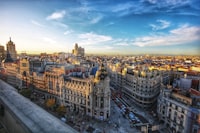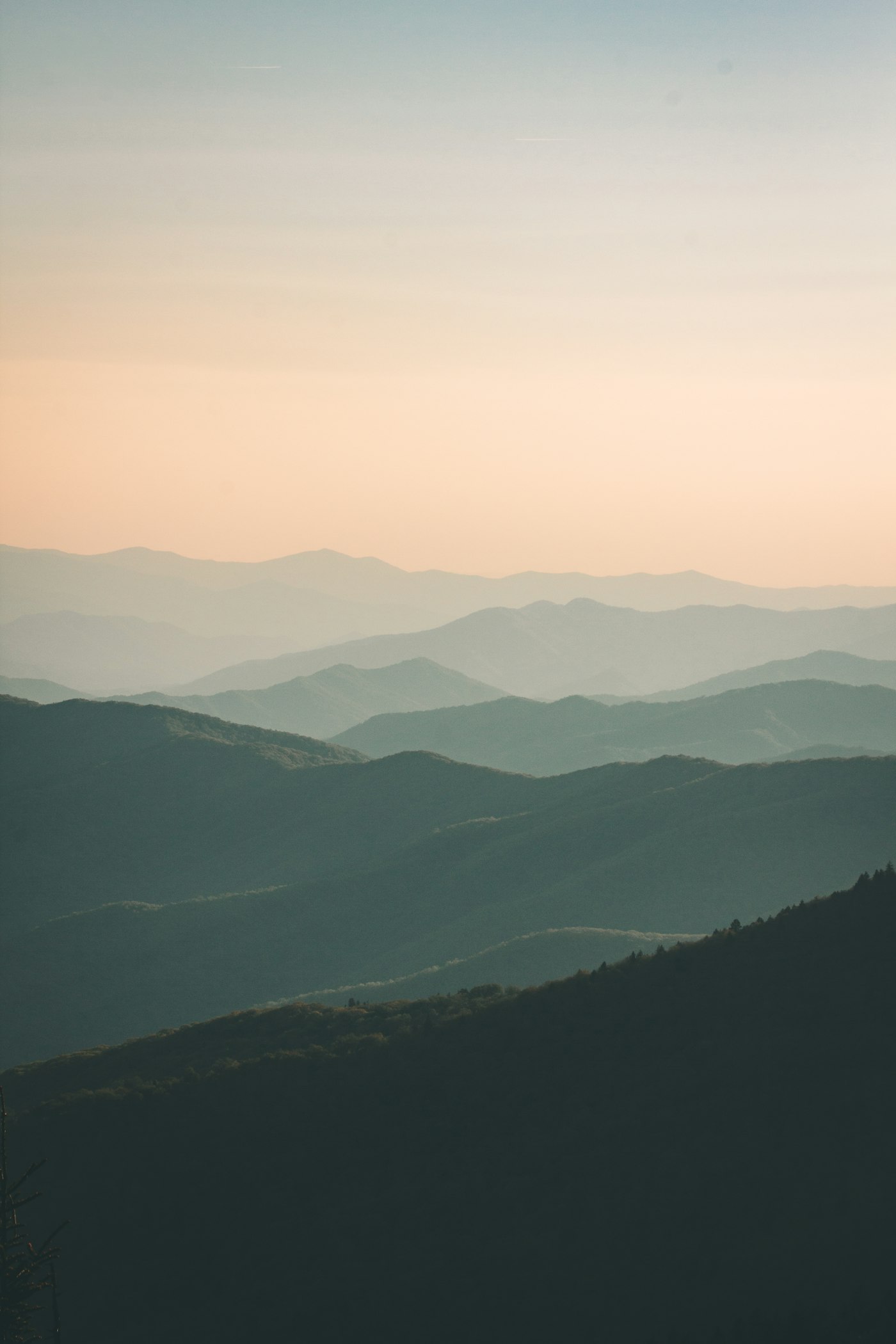
If you've ever seen a photograph so beautiful it looked almost fake — golden light flooding a cityscape, a portrait glowing with warm amber tones, a landscape that looks like it's on fire — there's a good chance it was taken during golden hour.
Golden hour is the period of time shortly after sunrise and shortly before sunset. During these windows, the sun sits low on the horizon and its light travels through a much thicker layer of atmosphere than at midday. The result is light that is softer, warmer, more diffused, and dramatically more beautiful than the harsh, direct light of the middle of the day.
Photographers chase it. Filmmakers plan entire production schedules around it. And once you understand it, you'll never look at the time of day the same way again.
Why Does Golden Hour Light Look So Different?
At noon, the sun is directly overhead. Its light travels through the atmosphere at a 90-degree angle — the shortest possible path — and reaches your camera or eye with most of its intensity and blue-white color intact. This is why midday light is harsh and unflattering: it creates strong shadows, blown-out highlights, and a clinical, cold quality.
During golden hour, the sun is near the horizon. Its light now travels at a very shallow angle — through much more atmosphere before it reaches you. That extra atmosphere scatters and filters out the shorter blue wavelengths of light, leaving the longer red and orange wavelengths to dominate. This is what creates the warm golden color.
"It's the same sun. It's the same camera. The only difference is where the sun is in the sky — and that changes everything."
The low angle also means shadows are longer and more dramatic, depth is more pronounced, and any surface that's roughly perpendicular to the sun (a face, a building facade, a mountain) catches the light beautifully rather than being washed out by it.
How Long Does Golden Hour Last?
Despite the name, golden hour rarely lasts exactly an hour. The actual duration depends on your location and the time of year:
Near the equator
In cities like Singapore, Bangkok, or Lagos — close to the equator — the sun rises and sets nearly vertically, moving quickly through the horizon zone. Golden hour here can last as little as 20-30 minutes. Photographers in these cities have to move fast.
At higher latitudes
In cities like London, Berlin, or Toronto — further from the equator — the sun moves at a much shallower angle through the horizon zone. Golden hour can last 90 minutes or more, especially in summer. At very high latitudes (Scandinavia, Alaska), golden hour can last for hours during summer.
Use TheTimeHub's golden hour tool to find the exact golden hour window for any city in the world, updated daily based on the current date and season. The times change every single day — bookmark it.
Morning vs Evening Golden Hour — Is There a Difference?
Yes — and photographers debate this endlessly.
Morning golden hour
Starts at sunrise. The air is typically cleaner (less dust and pollution from the day's activity), colors can be cooler and more pastel, and the world is quieter. Streets are empty. You get locations all to yourself. The downside: you have to wake up very early.
Evening golden hour
Starts about an hour before sunset. The air has more dust and haze from the day, which actually intensifies the warm colors — making evening golden hour often more dramatic and fiery than morning. Cities are alive, people are out, the energy is different. Most photographers prefer evening golden hour simply because they don't have to set an alarm for 4 AM.
What is Blue Hour?
Blue hour is the period immediately after sunset (or before sunrise) when the sun is below the horizon but the sky is still illuminated. Instead of the warm golden tones of golden hour, blue hour produces deep, cool blue light that is equally magical — just in a different way.
During blue hour, city lights turn on while the sky is still bright enough to show detail. This creates the perfect balance between natural and artificial light — the classic reason why cityscape photos taken at blue hour look so extraordinary. The sky isn't black, but it's a rich deep blue that contrasts perfectly with warm building lights.
Blue hour typically lasts 20-40 minutes after golden hour ends. Don't put your camera away when the sun sets.
Golden Hour Around the World
The quality of golden hour varies dramatically depending on where you are:
Desert cities (Dubai, Cairo)
Dust particles in desert air intensify the warm colors dramatically. Dubai's golden hour over the glass skyscrapers produces almost unreal amber and copper tones. Some of the world's most dramatic golden hour photography comes from desert cities.
Coastal cities (Sydney, Honolulu, Los Angeles)
Ocean moisture creates soft, diffused golden hour light with a slightly hazy quality that cinematographers love. Hollywood was literally built around LA's golden hour light quality.
High-altitude cities (Johannesburg, Mexico City)
Thinner air at altitude means cleaner, crisper golden hour colors — less atmospheric haze, more vivid. The light feels sharper and more defined.
TheTimeHub shows exact golden hour times for 31 major cities worldwide — updated daily based on the current season. Find your city and never miss the magic light again.
How to Never Miss Golden Hour
The simplest approach: check the golden hour times for wherever you are before you go out. The times change every single day as the seasons change — what was true last week is slightly different this week.
Some practical tips for making the most of golden hour:
Arrive early. Get to your location at least 20 minutes before golden hour starts. Set up, find your composition, and be ready when the light arrives. The best light often lasts only a few minutes.
Keep shooting through blue hour. Many photographers pack up when the sun sets. The ones who stay are rewarded with blue hour's unique light, and often the most dramatic shots come in the 20 minutes after sunset.
Face the right direction. During morning golden hour, face west to see the warm light illuminating subjects in front of you. During evening golden hour, face east. The light comes from the opposite direction of the sun.
Use the low angle. Position your subject so the low sun catches them from the side. Side lighting during golden hour creates beautiful texture and depth that flat midday light completely destroys.
Check golden hour times for your city